
Youth Digital Inclusion
A blueprint for more inclusive, youth-driven digital development in Kenya
Kenya’s youth population, estimated at over 20 million people aged 15 to 34, represents more than one-third of the country’s total population. Each year, over 800,000 young people enter the workforce, yet formal job creation has not kept pace. As a result, many are absorbed into low-productivity employment, and in some cases, exploitative labor and organized crime.
Addressing this crisis requires more than job creation.
It demands recognition of the informal and creative economies and urgent action to ensure that digitally connected platforms and support systems reach the young people most often left behind, those living in informal settlements, secondary cities, and rural communities.
Despite government investments, digital infrastructure remains unevenly distributed.
In contrast, community-based organizations (CBOs) working in these contexts have developed practical, low-cost, and youth-centred models that respond directly to the needs and aspirations of Kenya’s unseen majority.
CBO-led approaches demonstrate what is possible.
When digital infrastructure is grounded in trust, tailored to local conditions, and supported by mentorship and creativity, the impact is outsized.

Youth Digital Inclusion Roadmap
Informed by direct consultations with CBOs that are part of the Global Alliance for Communities, and grounded in policy analysis and budget review, this roadmap outlines six action points to reframe how digital access can serve as a pathway to income generation and long-term opportunity for marginalized youth.
The Kenyan government has set ambitious targets for expanding digital access. Yet, many young people, especially young women, feel unsafe or excluded in public digital spaces. Poor location, limited hours, and a lack of youth-informed programming make government-run hubs difficult to access. Youth prefer flexible, supportive spaces that reflect their needs and realities.
Recommendations

- Anchor digital access investments within community spaces managed by trusted CBOs that have established youth engagement models.
- Design county-level rollouts based on local youth behaviors, barriers, and demand, using participatory approaches that reflect diverse needs..
- Build CBO capacity to lead digital inclusion efforts by funding internal upskilling.
- Integrate mentorship, psychosocial support, and job-readiness services into digital hub operations.
- Measure success based on youth engagement and outcomes, rather than hardware installations.
Despite increasing digital access, many youth in Kenya lack the knowledge, skills, and support needed to use digital tools productively and translate that access into viable livelihoods. Training programs are often short-term, misaligned with youth needs, and delivered without the tools, mentorship, or continuity needed to create meaningful employment.
Recommendations
- Scale CBO-led training tailored to the real economy that youth are navigating.
- Integrate job search, business, and entrepreneurship modules, as well as training on how to use smartphones and apps to create, produce, and share work, into digital skills training to support income generation.
- Position CBOs as talent pipelines for the private sector, creating linkages from CBO digital and creative training to private-sector jobs.
- Support youth to build robust 5-year life and career plans that align their passions and motivations with practical opportunities.
Digital inclusion programs in Kenya are often shaped by fragmented implementation chains, where funding flows through multiple intermediaries before reaching communities at the local level. These top-heavy models have continued to be inefficient and poorly aligned with the realities on the ground. When CBOs are included only as late-stage implementers, they are unable to shape programming around real youth needs or sustain efforts beyond short-term project cycles.
Recommendations
- Fund CBOs directly to design and deliver youth-informed digital training, avoiding intermediary-led and co-managed ToT models that reduce flexibility and impact.
- Strengthen coordination between CBOs and county governments to reduce duplication, align efforts, and build program continuity across funding cycles.
- Strengthen coordination between national and county governments to improve the implementation of local interventions.
- Develop shared frameworks for tracking long-term outcomes that reflect youth feedback and include comparative assessments over time to measure lasting impact.
- Engage CBOs as long-term partners in the design, deployment, and management of digital infrastructure in underserved areas.
Young people in Kenya’s secondary cities, rural, and peri-urban areas face systemic digital exclusion. National infrastructure rollouts often prioritize population density and economic centers, leaving smaller counties and hard-to-reach communities behind. Youth living outside of Nairobi rely on expensive and inconsistent mobile data or cyber cafés to get online. Where internet access does exist, supporting infrastructure (such as electricity, routers, and space) is unreliable or inadequate.
Recommendations
- Use inclusion-based indicators, not just population size, to guide national and county-level infrastructure planning.
- Map underserved counties, towns, and sub-counties in partnership with CBOs to create a grounded and up-to-date picture of youth digital exclusion.
- Equip trusted CBOs with grants to invest in reliable connectivity, routers, solar power backups, and co-working devices that allow for group access.
- Pair infrastructure investment with programming funds, including training stipends, mentorship support, and basic digital literacy content.
- Include youth and CBOs in local digital planning and coordination platforms to ensure relevance, accountability, and uptake.
Most youth lack access to formal banking, have no credit history, and are excluded from government youth funds or private loans due to their age, informal employment, or lack of collateral. This financial exclusion limits their ability to receive online payments, manage mobile money accounts, track income and expenses, or access capital to grow their ventures. Some turn to high-interest mobile loans, which can lead to debt cycles and further reduce financial security. Linking digital literacy with financial tools is critical to enabling youth-led enterprise, income stability, and long-term engagement in the digital economy.
Recommendations
- Partner with SACCOs to design financial products tailored to youth entrepreneurs.
- Integrate financial literacy into digital skills and entrepreneurship training at CBO hubs, ensuring youth can learn to manage income, assess credit risks, and budget for growth.
- Foster local ecosystems, such as fairs where young people can showcase and monetize their work.
- Subsidize start-up kits or seed grants for CBO-linked youth entrepreneurs.
- Collect and share disaggregated financial inclusion data (age, gender, geography) to inform better-targeted interventions and policy frameworks.
Young people from marginalized communities and those with informal or non-traditional educational backgrounds are earning incomes as dancers, influencers, video editors, graphic designers, and musicians. However, their creative work is rarely recognized in policy and funding priorities. Most national digital strategies continue to focus on coding, cybersecurity, and other formal ICT tracks, overlooking the income-generating potential of creative work. Recognizing and investing in the digital creative economy would unlock a powerful vehicle for employment, enterprise, and self-expression.
Recommendations
- Develop and fund youth-led creative production labs that provide shared access to content creation tools, editing software, and co-working space.
- Integrate creative economy pathways to national youth employment and digital strategies, alongside ICT and STEM.
- Recognize and validate creative income as part of youth economic inclusion strategies, including youth funding criteria to enable access to financing schemes.
- Invest in creator education, including monetization strategies, copyright, and digital ethics.
- Convene cross-sector partnerships between ministries (Youth, ICT, Culture), digital platforms, and CBOs to create tailored monetization models and expand creative career infrastructure.
- Challenge stigma through public campaigns and parent and educator engagement, showing how creative work contributes to the economy and offers meaningful livelihoods.
roadmap
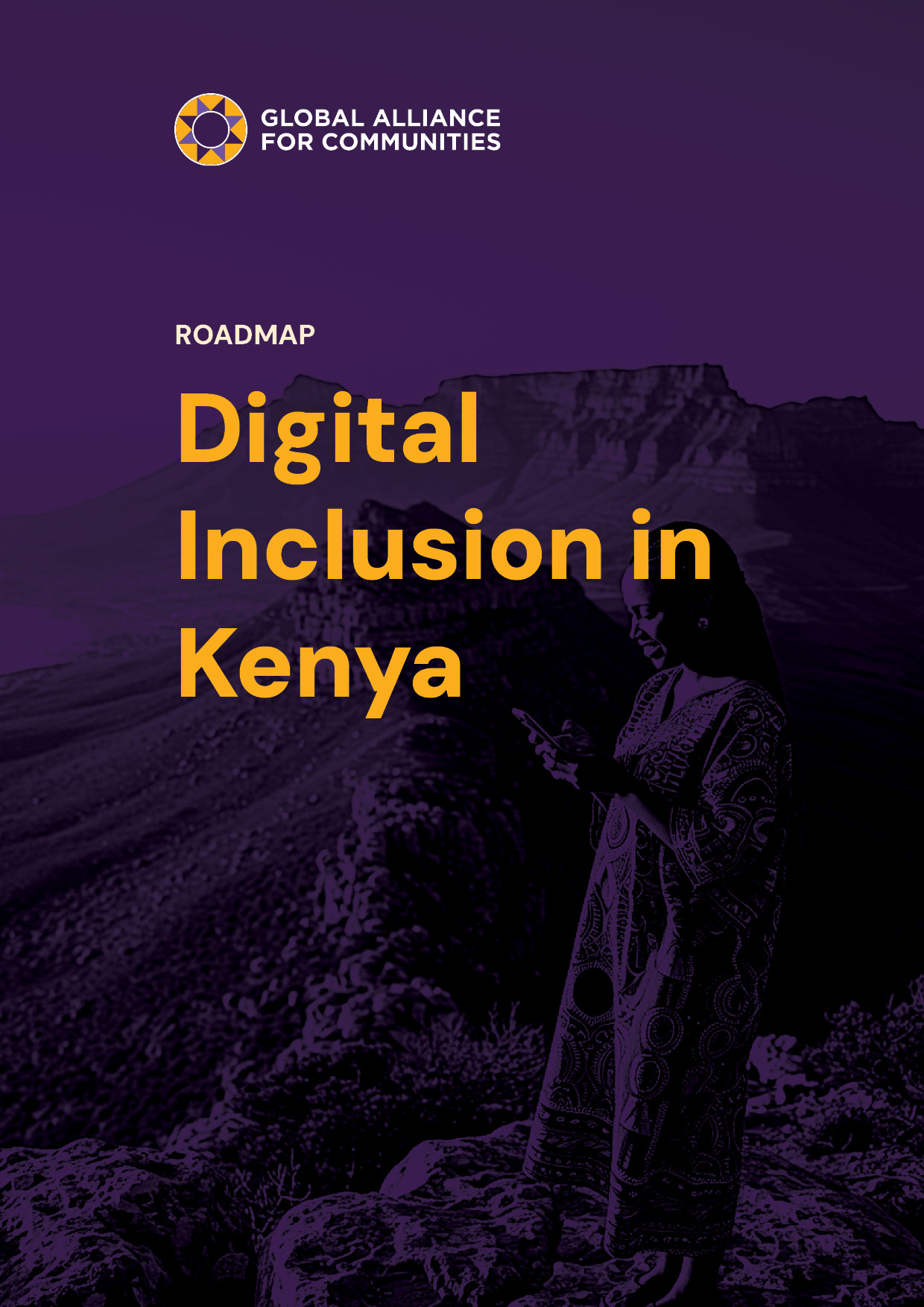
Youth Digital Inclusion
Download the full roadmap to dive deeper into the six action points and read direct insights from our members working at the forefront of youth digital inclusion.
Join the conversation
We invite policymakers, institutions, funders, and community leaders to join the conversation. Reach out to our secretariat to discuss the action points in this roadmap, explore partnership opportunities, and share how you are advancing digital inclusion in Kenya.