
Fundación Paraguaya
Luis Fernando Sanabria: championing community-driven development in Paraguay
People-centered empowerment
Fundación Paraguaya is a microfinance organization that has been a cornerstone in the fight against poverty in Paraguay. Initially supported by Dr. Martin Burr, the organization has evolved over the decades, moving from traditional charity models to a more dynamic, socially-focused, for-profit entity. This shift was motivated by their microfinance community members, who expressed a desire to determine the direction of their own businesses and initiatives.
“The Foundation heard them—heard what was their purpose in life, and what was the [kind of] business they wanted to run—so, the program didn’t impose on them a certain type of business. I emphasize this because I think it is key: we have to hear people and communities. We cannot impose top-down programs anymore because in every neighborhood, whether in Nairobi, Asunción or Rio De Janeiro, every person in those places knows what they need and what’s the best way to make progress in their lives,“ says Luis.
Luis notes that while microfinance was their initial focus, success in that area allowed them to expand their programs into health insurance and sanitation. This approach encouraged community members to take ownership and believe they could tackle other challenges.
Protagonists, not beneficiaries
Luis observes that early development and corporate social responsibility (CSR) projects often prioritized donations and dictated development strategies, positioning communities as passive recipients rather than active participants. He adds that this “donor-beneficiary” dynamic often results in limited engagement during project implementation and post-program sustainability challenges due to a lack of community ownership.
“We have to put families and communities [at the center] of this equation. We can no longer impose top-down solutions without hearing them. So they are not beneficiaries; they have to be protagonists of their own development,” he emphasizes, adding that this family-led approach to poverty reduction has been successfully implemented in Paraguay and other countries.
Their method focuses on families receiving financial education, developing their own financial development plans, and leveraging available resources to meet their specific needs. By placing families at the center of development efforts, we can deliver interventions that are relevant, sustainable, and, most importantly, effective.
Using technology to scale impact
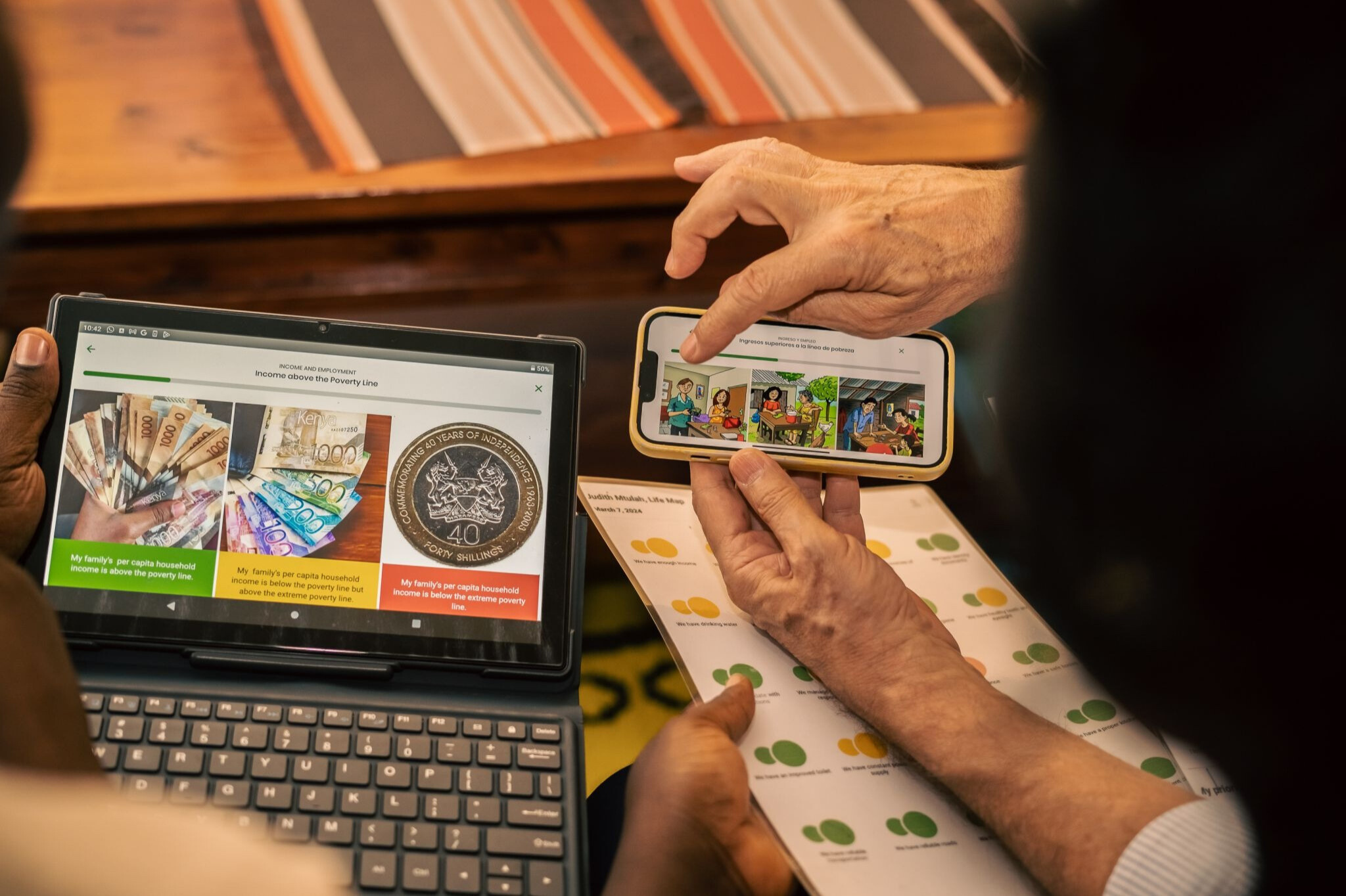
Fundación Paraguaya has developed a picture-based mobile app that helps families to assess their own economic situation, and receive tailored feedback on areas of improvement. Instead of using social workers as intermediaries to collect data, the app allows families to directly capture their needs at a household level.
“…today technology can allow us to know exactly what a family—not only the community, but the household—needs. By aggregating the information, you can know what the community needs really are. We started this program in Paraguay, but today we have partners in 60 countries, many of them in Africa.”
This tool, which is built on the belief that communities are best placed to identify their own needs, uses tailored graphics based on the user’s location. Luis notes that this representation is important, especially because they operate multinationally. Upon registration, users can access surveys and directories of locally available services, and program activities.
Parting shot: It is possible!
The journey to eliminate poverty is long and challenging, but with leaders like Luis at the forefront, there is hope for a future where all families have the opportunity to thrive. His story is a powerful reminder of the importance of community-driven development and the transformative impact that grassroots initiatives can have on poverty alleviation.
“We have to believe that we can eliminate poverty, that it is possible! We don’t have to talk anymore about alleviating poverty, or reducing poverty. Those are weak goals. We need to establish the goal of eliminating poverty, because it’s possible. So in the past, humanity has eliminated many diseases, so why not poverty?”
Luis’ work with Fundación Paraguaya continues to inspire and empower communities across Paraguay, and his insights offer valuable lessons for development practitioners around the world.
For more information: Website


BudgIT Foundation, Nigeria
Oluseun Onigbinde's civic tech journey transforming public finance and accountability in Africa
The Global Alliance for Communities recently had the pleasure of speaking with our member, Oluseun Onigbinde, the co-founder of BudgIT Foundation, a pioneering social innovation organization with a presence in five African countries.
Oluseun’s journey into civic technology is testament to the power of frustration turned into action, and his work continues to strengthen the relationship between citizens and their governments across Africa. His organization works to improve development and service delivery by increasing transparency and accountability in the use of public resources.
A spark ignited by frustration
Oluseun’s interest in civic tech was born out of a deep-seated frustration with the state of Nigeria’s public finances. Looking back, he says he recognized that lack of transparency and accountability in government spending was one of the major hindrances to effective service delivery.
This realization led him and his co-founder, Joseph, to establish the BudgIT Foundation in 2011 with a clear mission to simplify public budgets and ensure citizens have access to information that allows them to hold their governments accountable.
Since its inception, BudgIT Foundation has developed various civic tech solutions to bridge the gap between citizens and their governments. In addition to developing mobile applications and websites, the foundation has also added partnerships and research to their change-maker’s toolkit. They have published dozens of budget analysis reports, policy papers, and investigative pieces on public finance and governance.
By making public finance data more accessible and understandable, the organization has empowered millions of people across Africa to engage in civic discourse and demand better governance. Currently, the organization has programs running in Nigeria, Ghana, Sierra Leone, Senegal and Liberia.
Addressing development challenges in Africa
During our discussion, Oluseun identified key challenges facing the African development sector. He stressed the importance of fiscal efficiency, enhanced public finance management, and stronger accountability mechanisms as critical areas that need urgent focus. Oluseun also pointed out that cultural and societal norms often hinder participation in development, creating additional barriers that need to be addressed.
Having worked in multiple countries on the continent over the last decade, Oluseun underscores the importance of collaboration in driving lasting change. His organization’s decision to join the Global Alliance for Communities stems from their commitment to supporting and strengthening civil society organizations across the continent.
Acutely aware of the many challenges the sector faces — such as short-term grants, a lack of solidarity among peers, and the need for significant resources for sustainable change — Oluseun remains hopeful that collective action can lead to meaningful progress.
Building trust and encouraging innovation
According to Oluseun, openness, trust, and patience are essential for achieving better results in African development. He stressed the importance of fostering deeper trust between the international donor community and African leaders, saying this would create a more supportive environment for innovation.
By centering open communication in discussions about funding and program implementation, Oluseun says we can begin to interrogate the efficiency of common development practices on the continent.
“There is a lot of patience being given to international non-governmental organizations (INGOs), where they are awarded 7-year projects worth millions of dollars. Then you have young (local) organizations that have proven the concept and done incredibly well in advancing accountability and transparency but are struggling to get support for even USD 500 thousand.
So you find this local organization is always in a fragmented funding cycle that is taking a lot of their energy chasing different funders – energy that could be better used in service of their mission. One way to address this would be the use of a collective fund where the organizations are assured that once they get these resources over a certain period of time, they can run and set monthly or yearly targets.
With such a system, local organizations can be honest about the challenges they face and how they are trying to mitigate those issues. In addition to increasing funding allocations to grass-roots organizations, we also need to increase our patience and trust for local leaders.”
With the right support, local organizations can create positive change in their communities and expand the reach of their programs for greater impact, he adds.
This belief is central to GAC’s mission, and that of its member organizations. We partner with local leaders globally to enhance their capacity and impact through training, research, networking, and advocacy programs.
The future of civic technology
Since its inception in 2011, the organization has grown from a small team of three to a leading fiscal transparency group in West Africa with around 80 staff. Through their work, BudgIT Foundation has activated access to public services in over 4,000 communities in Nigeria, reaching approximately 12 million people.
For the team at BudgtIT Foundation, the future of civic technology is bright. Oluseun expressed excitement about the potential of AI and machine learning to revolutionize public finance data management and combat corruption. He believes that the institutional adoption of civic tech solutions is crucial for directly influencing the culture of governance in Africa.
He also offered valuable advice for those looking to make an impact in the field: ”…stay hungry, patient, and curious while grounding your efforts in a deep understanding of local contexts, norms, and cultures.” This approach, he believes, is key to ensuring the efficacy and sustainability of civic tech initiatives.
For more information: Website

A conversation with Vanessa D'Souza, CEO of SNEHA
Increasingly, proximate and community leaders are demonstrating to global leaders that they not only carry the solutions in their communities but are creating real and lasting change.
These proximate leaders include Vanessa D’Souza, the Chief Executive Officer of SNEHA (Society for Nutrition, Education, and Health Action), which is a member organization of the Global Alliance for Communities based in Mumbai, India.
Celebrating 25 years of effecting change at a community level, SNEHA is improving the health and well-being of women and children, with a particular focus on preventing and addressing gender-based violence.
The power of community outreach
In the early 1990s, neonatologist Dr. Armida Fernandez and her team cared for underweight and premature infants from low-income households in Mumbai, who often experienced poor health outcomes. Over the years they realized in-hospital interventions were not enough, because many of the children they treated struggled to survive or hit their developmental milestones after being discharged.
“Hospitals alone were the answer for ensuring the health of newborns. If we wanted to make a change in their lives, we had to go beyond the four walls of the hospital. We had to go into the slums, into the communities they live in, into their homes if we were to succeed in changing their attitudes,” Dr. Armida Fernandez recalls.
To find lasting solutions to child mortality and stunted development, they spent time in Mumbai’s low-income settlements, learning about the compounding challenges of lack of information, resources and access to quality health services. Using the information from their community outreach, SNEHA designed and implemented specialized programs in partnership with the public health system. As their impact grew, so did the support from individuals and organizations—including Vanessa D’Souza, who was working in finance when she first got involved with SNEHA.
Inspired by impact
Vanessa’s path to leadership at SNEHA began when she volunteered for the organization whilst working at a leading global bank. Inspired by the impact she witnessed, she left her banking job for the social impact sector.
Twelve years later, she serves as the CEO, and she is even more deeply invested in the community and motivated by the significant progress made by the organization and the sector. This progress includes seeing an increased awareness and sensitivity towards gender-based violence, which she notes, has been accompanied by a greater appreciation for community mobilization and engagement.
Another encouraging development, she adds, has been the impact of India’s Corporate Social Responsibility (CSR) Act. This legislation has led to increased engagement from the corporate sector in social causes and a growing trend of professionals transitioning from corporate careers to the social sector. This shift has brought fresh perspectives and resources to the field, enhancing the capacity of organizations like SNEHA to drive impact.
Addressing global challenges
Looking at the broader development sector, Vanessa emphasized the importance of recognizing the interconnectedness of global challenges and the need for direct engagement with communities to fully understand and address the problems they face.
“One thing I’d like to see in the wider community is people recognizing the interconnectedness we have. And therefore, they are not thinking of it as this is somebody else’s problem but actually thinking of it as our problem and doing whatever is possible within their own capacity.”
For Vanessa, evidence-based models and qualitative research are essential tools for creating effective solutions that can be scaled and replicated in different global contexts.
A prime example of this approach is SNEHA’s work in addressing urban malnutrition. Initially focused on distributing ready-to-use therapeutic food, the organization shifted its strategy to providing home-based counseling to caregivers. This change not only resulted in a significant reduction in malnutrition but also empowered communities to take ownership of their health outcomes.
The power of grassroots engagement
Throughout this process, what’s stood out for Vanessa is the value of deep community engagement, innovation, and honesty in grassroots organizations. She believes that staying true to the mission, being transparent about successes and failures, and maintaining a focus on quality over quantity are crucial for the sustainability and impact of grassroots initiatives.
During our discussion, Vanessa also highlighted the importance of donor support in model building and research. She stressed that donors should be patient and understanding, recognizing that not all initiatives will go as planned. This openness to learning from mistakes is key to fostering innovation and resilience in the social sector.
Looking ahead
At the Alliance, we believe that leaders like Vanessa are needed now more than ever. Their leadership at SNEHA exemplifies the power of passion, commitment, and community engagement in driving social change.
Her journey from volunteer to CEO, her insights into the progress and challenges in the social impact sector, and her vision for the future are a source of inspiration for all of us at the Global Alliance for Communities.
We look forward to continuing our collaboration with Vanessa and SNEHA, and working together to amplify impact and empower communities across the global south.
GAC works with member organizations like SNEHA to champion for the localization of aid, because we believe local organizations understand the community dynamics, cultural needs, and power structures that inform key interventions. Learn more about the work we do with grassroots organizations, and apply for our free membership here.

MAONO Africa Centre for Transformation
Maono Africa Centre for Transformation (Maono) started in 1999 as a local cultural group seeking to improve the lives of underserved youth living in Dandora informal settlements, on the eastern outskirts of Kenya’s capital city.
Like many others living in rapidly growing urban centers in the global south, youth in Dandora face “both visible and invisible divides that often trigger various forms of social, economic and political exclusion.” They encounter major obstacles in accessing social services, education, extracurricular activities, and meaningful employment.
Having faced similar challenges growing up, Maono Founder Kenneth Owili says these urban youth often lack the support they need to attain their full potential.
“Growing up in Dandora I passed through so many challenges when I was trying to make it in life…I did not have access to platforms or opportunities that could help me explore the kind of person I could be. This is the motivation that led me to form Maono Center for Transformation,” recalls Owili.
Driven by the goal of helping young people develop their talents and skills, the local cultural group evolved into a nationally-recognized NGO that provides sports, arts, capacity building, health, and livelihood programs.
One of Maono Africa’s key initiatives is the establishment of talent hubs—safe spaces where young people can explore and develop their skills in various fields. The organization runs several hubs, including a football academy, a dance academy, and a theater program. These hubs serve as more than just training grounds; they are lifelines for young people who might otherwise be drawn into crime or other destructive activities due to idleness and lack of opportunities.
Addressing Global Challenges at a Community Level
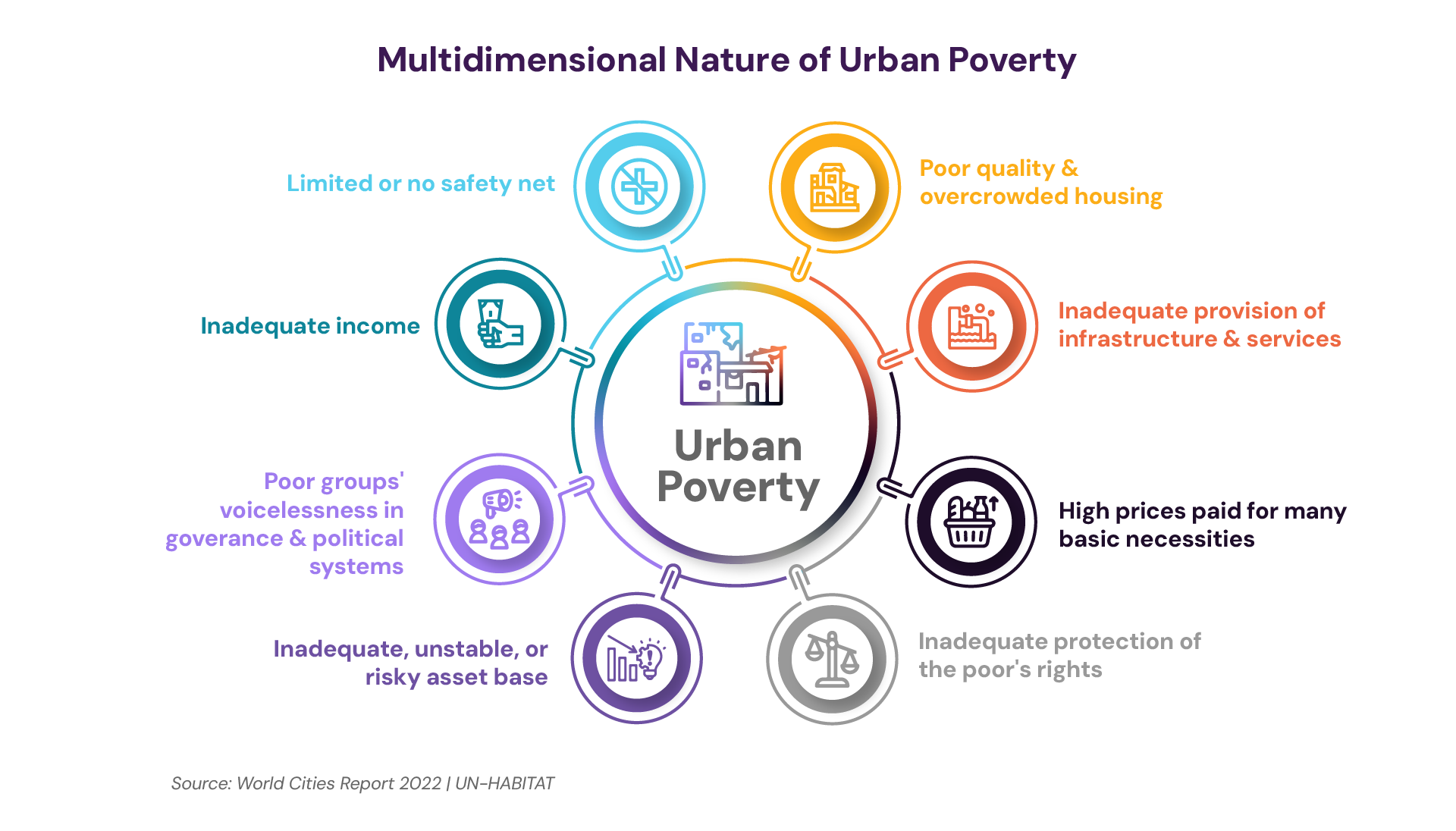
Urban poverty and inequality are intertwined; they reinforce each other to create conditions of disadvantage that constrain the poor from enjoying the benefits of sustainable urbanization. The multidimensionality of urban poverty and inequality should be at the center of interventions to create inclusive and equitable urban futures globally. (World Cities Report, 2022)
The challenges faced by urban populations are often interconnected. Households that struggle with unemployment often also face food insecurity, and reduced access to basic education for their young. Effective support to these communities often requires a multifaceted approach to program design and implementation.
A clear illustration of this is the assistance given to Caroline Obwena, a single mother who initially reached out to Maono for help with school fees for her nephew, whom she is raising.
“We had a problem with school fees, so Maono chipped in and paid the fees. Now he is in school, and he is doing fine. They also helped me start my business. I am a single mother, and I did not have a stable job to support my family. Maono chipped in to help me start my omena (small freshwater fish) business. So I can say, in my household, Maono has given me a second chance. A wonderful second chance,” Obwena said.
Although the initial support focused on providing education for one child, the livelihood program enhanced the overall well-being of Obwena’s household. Insights into the interconnectedness of these challenges are best understood by organizations that are embedded within and led by members of the affected communities.
Looking back on his decades of experience at Maono, Owili notes that while challenges may manifest differently on a local level, issues such as urban poverty and unemployment are universally present. This understanding, he says, underscores the importance of peer-learning and networking through organizations like the Global Alliance for Communities (GAC).
Partnering Effectively for Impact
In the complex landscape of funding for community-based organizations, the dynamics between donors and grassroots groups play a crucial role in achieving meaningful impact. While recognizing the important role that various partners play in advancing sustainable development, Owili emphasizes the need to improve mutuality in these relationships.
“Many partners weigh a lot and measure the level of risk before funding a community-based organization. As community-based organizations, do we also consider the risks that the donors are bringing onboard? We should work to create a more level playing field between donors and grassroots organizations. With that mutual partnership, we will be able to bring meaningful impact at a community level.”
GAC works with member organizations like Maono to champion for the localization of aid, because we believe local organizations understand the community dynamics, cultural needs, and power structures that inform key interventions. Learn more about the work we do with grassroots organizations, and apply for our free membership here.

Development Agenda for Girls and Women in Africa Network
Meet Tendai Kunyelesa from the Development Agenda for Girls and Women in Africa Network (DAWA) in Zimbabwe.
DAWA is a feminist, locally-led network that serves as a resource hub for Adolescent Girls and Young Women (AGYW) to access information and technical support to run effective organizations.
Having supported DAWA’s programs, Tendai delved into the challenges grassroots organizations encounter in securing a place at the global decision-making table. She stated:
“Despite the impact at the community level, grassroots organizations often face barriers to gaining visibility and influence on larger platforms. We have had similar challenges when seeking to amplify our work, which is why joining the Global Alliance for Communities was important to us.”
Tendai hopes that with the membership, DAWA will have a platform to elevate its advocacy efforts and expand its reach to underserved populations across the Global South.
At the Global Alliance for Communities, we offer a space for organizations like DAWA to connect, learn, and grow together. Through shared experiences and collective strategies, members of the Alliance strengthen their capacity to address systemic challenges and advocate for locally-led development.

Inua Village to Global Foundation
Zachuas Ogonji is a Director at Inua Village to Global Foundation, a locally-led organization based in Kenya, and a member of the Global Alliance for Communities.
The foundation is working to solve social and economic development challenges for rural communities in Kenya by leveraging local resources to tackle poverty, increase access to quality education, establish community-based industries, and promote agri-business and value-added farming initiatives.
Zachuas shared with us their motivation behind joining the Global Alliance for Communities:
“At Inua Village to Global Foundation, we wanted to find people addressing the same gaps we saw in our communities. We hope this membership will support us in establishing partnerships for us to test out new models with our peers.”
Zachuas is passionate about empowering grassroots and community-based organizations. He believes that when grassroots organizations are empowered with resources and knowledge, they can better uplift their communities.
“CBOs are the ones working directly with communities to uplift them. They spend day and night with their communities, thinking and seeing both the challenges and the solutions.”
Zachuas also expressed his frustration with how funders sometimes fail to tailor programs to meet specific communities’ needs and circumstances. However, he is optimistic that a shift in the sector is underway with more grassroots leaders pushing for locally-led development and calling on funders to change their models and prioritize communities.
At the Global Alliance for Communities, we serve as a platform to champion locally-led development and localized aid. We aim to shift the funder’s mindsets and exchange best practices with like-minded changemakers across the Global South and Global North.
TAYOBECO
Meet TAYOBECO, a locally led non-governmental organization (NGO) based in Tanzania and a member of the Global Alliance for Communities.
TAYOBECO works at the grassroots level to support communities by prioritizing health, economic empowerment, HIV/AIDS response, gender equality, and leadership development programs. Their approach ensures communities are leading the process of solving their challenges and that they have the agency to own the projects.
Adinani Mussa, a Program Manager at TAYOBECO, shares:
“We have always understood that the communities we serve are best placed to solve the challenges they face. Our responsibility is to facilitate and co-create solutions that work for these communities.”
In 2022, TAYOBECO became a member of the Global Alliance for Communities. According to Adinani, their decision to join the Global Alliance for Communities was to realize TAYOBECO’s vision of building partnerships that prioritize the voices and needs of marginalized communities. They wanted a platform where they could share their experiences working at the grassroots level and develop collaborations with like-minded organizations.
“Many grassroots CBOs face challenges, such as access to funding and research support. Working with the Global Alliance for Communities can bring these organizations closer to addressing these challenges by pooling resources, expertise, and networks.”
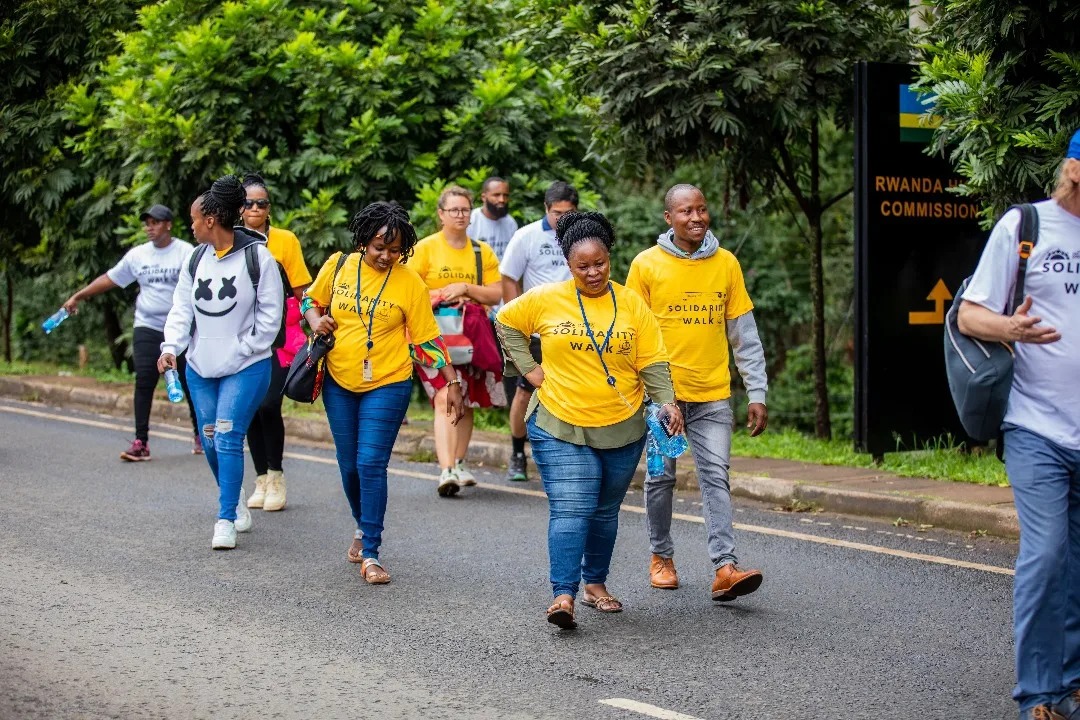
Through its membership with the Global Alliance for Communities, TAYOBECO is strategically positioned to further its mission of driving positive change at the grassroots level.

Rural to Action CBO
Meet Beryl Atieno, co-founder of Rural to Action, a community-based youth-led organization in Homabay, Western Kenya, and member of the Global Alliance for Communities.
Rural to Action seeks to transform the livelihoods of children and youths impacted by poverty and health challenges in rural and informal settlements in the Homabay community. Beryl stated:
“We capacity-build and empower adolescents and youth with entrepreneurship and green skills to improve independence and resilience. Our mission is to fight short-term hunger and improve health outcomes among youths in the rural community through a cup of porridge and peer-led social enterprise.”
Becoming a Global Alliance for Communities member was important for Rural to Action CBO because it aligned with their need to expand their network. She shares:
“We wanted to meet other grassroots leaders facing similar challenges as us and ask them how they are solving these problems. When working in communities, it can be isolating for us because we do not have a place to meet other leaders to share our experiences.”
At the Alliance, Beryl hopes they can gain insights, support, and resources to enhance their impact and reach within their community.