

News round-up: holiday edition
As the year comes to a close, we reflect on some of the moments, milestones, and shared work that shaped 2025 across the Alliance.

As we close the year, we want to thank our members for the time, care, and leadership they bring to our community, alongside the demands of frontline work. Looking back on 2025, there is much to be proud of.
The Alliance welcomed 44 new member organizations and piloted chapter-led training in Kenya, reaching more than 135 members, with several participants securing new funding.
Over the course of the year, members advanced shared research and advocacy, from the Youth Digital Inclusion Roadmap to the Climate Action Statement, and carried the case for localization into global policy spaces, including the Rockefeller Foundation’s AfricaXchange convening and the Issroff Family Foundation Collaborative Learning Initiative.
We move into 2026 with renewed purpose, extending best wishes to members and their teams for a restful holiday period and a strong start to the year ahead.
Strengthening the Case for Local Leadership
Research and advocacy grounded in CBO experience
In 2025, we advanced our localization work by reinforcing why local leadership is essential when systems are under strain. During the USAID funding freeze, we drew on lessons from COVID-19 to underline that even when external funding shifts, community-based organizations are the most effective actors in sustaining services, maintaining trust, and reaching people at scale. We further articulated this case through our climate action statement developed with four climate-focused CBOs, which called for climate responses grounded in Indigenous and local knowledge, locally designed solutions, and pathways for young people into green jobs. We also highlighted how youth-led and -focused CBOs are responding to rising unemployment in marginalized communities in Kenya, identifying practical steps to link digital access to income and opportunity. These insights came together in the Youth Digital Inclusion Roadmap, written with 10 CBO leaders and setting out six action points to inform national approaches to youth, digital access, and livelihoods.
Chapter-led training takes off across the Alliance
We piloted member-led training grounded in regional priorities
This year, we tested and rolled out our first chapter-led CBO training. Chapters in Kisumu and Siaya County in Kenya received leadership, governance, and resource mobilization training, reaching more than 135 members. The training was designed and delivered by United Destiny Shapers, focused on priorities identified by local CBOs, and several members, including Kamakowa Jamtaka, have secured new funding as a result. These initial trainings demonstrated the potential of member-led learning to strengthen local networks, and we look forward to supporting the next round of regional learning in 2026.
Local voices reach global stages
Members representing community leadership in global forums
Alliance members took part in global platforms this year including the Rockefeller Foundation’s AfricaXchange convening, the United Nations General Assembly, and the Cerrito Forum in Paraguay, contributing community perspectives to discussions on localization, partnership models, youth participation, and financing for community-led work. In addition, Paul Makoe from CHF in Tanzania, recommended by the Alliance, was selected for the Issroff Family Foundation Collaborative Learning Initiative and will join the January 2026 cohort, reflecting the growing recognition of Alliance members as leaders shaping policy and practice at national and international levels.
In the news
The Future of International Aid
David Miliband, a former British foreign secretary, argues that even without US funding cuts, there would be a need for fresh thinking about how the aid sector works. Financial resources and other programs are not being delivered as efficiently as they could be to do the greatest good for the greatest number of people who are most in need. Read more here.
Resource corner
Call for Applications: RHNK is launching the one-year Pan-African Youth Leadership Academy fellowship to empower young African leaders in SRHR advocacy. Deadline: Dec 20
Call for Applications: The UNICEF Leading Minds Fellowship on Climate Education is seeking young climate leaders globally to shape climate education policy. Deadline: Dec 31
Call for Proposals: The 2026 GCSP Prize for Transformative Futures in Peace and Security rewards groundbreaking concepts for global peace and security. Deadline: March 20, 2026

Member-led leadership and governance training
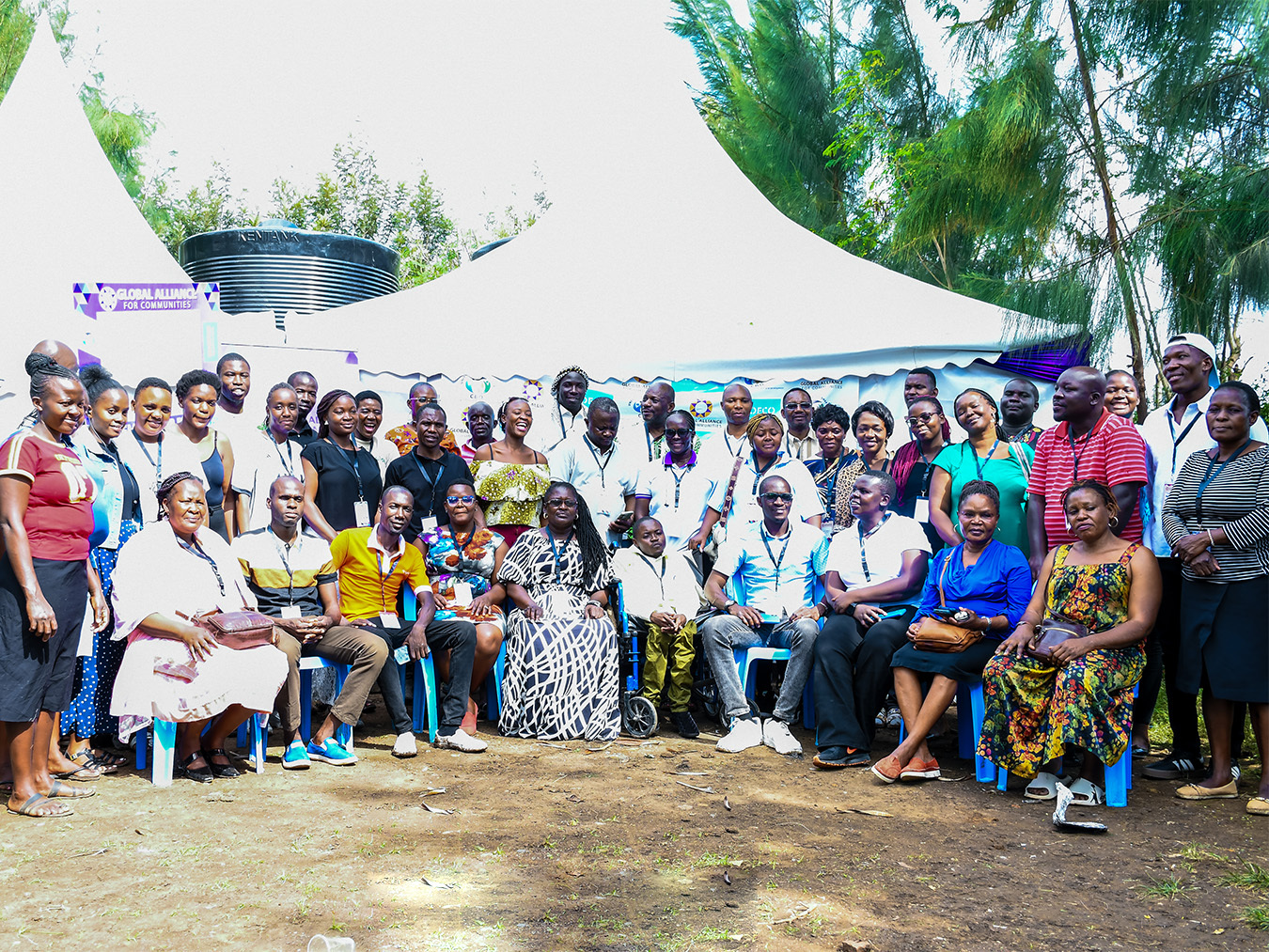
Our members in Kisumu, Western Kenya, came together to sharpen their skills in leadership, governance, and resource mobilization.
On 25-26 September 2025, members of the Global Alliance for Communities gathered at the United Destiny Shapers grounds in Nyalenda, Kisumu, for two days of skills training and peer-to-peer learning. More than 60 representatives from our member CBOs took part, joined on the second day by colleagues from the Basanja Coalition in the Democratic Republic of Congo.
The sessions were designed to equip members with practical skills, tools, and confidence to strengthen governance systems, grow their leadership, and expand their ability to mobilize resources for sustainable community development.

Key learnings
The first day focused on the foundations of leadership, governance, and advocacy. Through presentations, group work, and case studies, participants explored principles such as accountability and inclusivity, how clear structures and organograms reduce confusion, and what qualities define effective leaders. They debated the strengths of different leadership styles, from democratic to transformational, and reflected on context-driven approaches like the chameleon or green mamba.
Governance was made practical with tools such as constitutions, codes of conduct, and financial accountability systems. Conflict was tackled head-on, discussing common causes like power struggles or poor communication, and strategies such as mediation and consensus building. The day closed with advocacy, examining forums ranging from barazas and churches to media and storytelling, while also naming challenges like limited resources or information gaps.
Participants left with sharper insights into how leadership capacity strengthens both sustainability and advocacy.
The next day turned to the question of resources. Members and partners explored different avenues of mobilisation, from financial contributions and in-kind support to partnerships and technical expertise. A conceptual framework guided discussion through needs assessments, resource mapping, and strategy development.
Hands-on sessions on grant proposals and project descriptions gave participants the chance to practice drafting problem statements, activities, budgets, and sustainability plans. The Basanja Coalition shared experiences from the DRC, bringing fresh ideas from their cross-border work.
A key takeaway for our members was that resource mobilization is broader than donor funding and begins with recognizing the value already present in communities.
Looking ahead
The gathering closed with a shared commitment to sustain this momentum through refresher training, mentorship for emerging leaders, simplified toolkits tailored to CBO contexts, follow-up clinics on proposal writing, and joint proposals across member organizations.
By investing in leadership, governance, and resource mobilization, our members are strengthening their organizations and shaping more accountable and inclusive development pathways.

A practical guide to crisis preparedness for lean teams
Whether you're new to contingency planning or refining your approach, this is your guide to staying grounded and moving forward through any crisis.
Every organisation will face a crisis at some point. It might come in the form of a sudden funding cut, political unrest, a reputational issue, or even a leadership transition.
Some crises announce themselves with noise and urgency. Others are quiet, creeping in as an email, a news headline, or a shift in donor priorities.
What determines whether your organisation weathers the storm or is derailed by it isn’t just how big the crisis is. It’s how ready you are.
This article distils practical guidance on crisis planning shared during the Global Alliance for Communities Learning Curriculum Webinar, developed for lean teams working in complex environments with limited resources.
What Do We Mean by “Crisis Planning”?
Crisis planning is not about predicting disasters. It’s about making smart decisions today that help you respond faster, communicate more clearly, and continue your work even when the unexpected happens. Crisis planning is made up of three key components:
- Scenario Planning – imagining what might go wrong and preparing accordingly
- Business Continuity Planning – building your “Plan B” to continue essential work under strain
- Crisis Communication Planning – sharing information clearly, calmly, and compassionately when it matters most.
These plans don’t need to be long or complicated. They need to be honest, action-focused, and known to your whole team.
1. Scenario Planning: Preparing for the “What Ifs”
A scenario is not a prediction, it’s a possibility. Start by asking:
- What keeps you up at night?
- What don’t you know that could affect your work?
- What broad trends are unfolding politically, economically, and socially in your context?
- If the worst (or best) happens, what will the world around you look like?
- How will your strategic choices play out across different scenarios?
From there, map 3–5 likely scenarios. For example:
- A major donor withdraws funding
- A natural disaster impacts your community or team
- Leadership changes unexpectedly
- Government restrictions affect operations
- Reputational harm arises from misinformation or misunderstanding
What would you stop, start, or change in each case? Who would you need to inform? What would success look like, even in a reduced or altered state?
2. Business Continuity: Keep the Work Going
Once you’ve imagined the scenarios, business continuity planning helps you maintain momentum, even with fewer resources. Start by defining your essentials:
- What must continue? What’s core to your mission and directly impacts your community?
- What can be paused temporarily? How would you restart these programmes later?
- What are your critical dependencies? Think about:
- Staff and volunteers
- Key systems and data
- Legal obligations and compliance
- Facilities and physical spaces
- Partners or suppliers
Then ask your team three essential questions to guide your thinking:
- What are our priorities?
- How can we close out projects with dignity?
- How can we plan with what we have?
These questions help anchor your planning in your mission, protect the trust you’ve built, and ensure that decisions are made with care, not panic.
Tip for lean teams: Cross-train your staff so that one person’s absence or departure doesn’t shut down an entire function. Build flexible staffing models that can be scaled up or down quickly.
Build Lighter Versions of Your Programmes
When resources are stretched or a major funder pulls out, it’s not always possible—or wise—to continue delivering all your programmes at full scale. But that doesn’t have to mean shutting down entirely.
Planning lighter, adaptable versions of your work allows you to keep going, even in constrained conditions.
Think of it as designing a “minimum viable programme”: a simplified, cost-effective version of your core work that still delivers meaningful impact. Start by asking:
- What are the non-negotiables of this programme?
- Who must continue receiving support no matter what?
- Which elements could be reduced, phased, or temporarily paused?
- Can delivery be adapted to a smaller geography, fewer beneficiaries, or lower frequency?
For example:
- Could in-person sessions shift to phone-based support or group messages?
- Could a 12-week training be condensed into a 4-week essentials version?
- Could partnerships be leveraged for shared delivery or resource pooling?
This kind of thinking is not just about survival. It’s about resilience and continuity. With leaner models in place, you can quickly pivot during a crisis, maintain trust with communities and donors, and scale back up when resources allow.
Tip: Write up these lighter versions now—not in full detail, but as a clear outline of what could be activated if needed. Doing this in advance gives you options under pressure, rather than decisions made in panic.

3. Crisis Communication: What You Say, and How You Say It
In a crisis, your team, your community, and your funders need reassurance. Crisis communication planning is about communicating fast, honestly, and with empathy. Use the Know, Feel, Do model to shape your messages:
- Know – What does your audience need to understand?
- Feel – What emotion or reassurance should your tone evoke?
- Do – What action should they take, if any?
During the webinar, Alliance member Tendai Kunyelesa from DAWA Network (Zimbabwe) shared that two of their gender programs were disrupted by the USAID funding freeze—a challenge many organizations now face. It’s the kind of situation this framework is can help you navigate, as shown below:
- Know: A key donor has paused funding. We are reviewing our programme timeline.
- Feel: You are at the centre of our concern. We are doing everything possible to continue services.
- Do: Stay connected to updates through your community WhatsApp group.
Steps to prepare:
- Map your audiences: staff, community members, donors, media, partners, government
- Decide who speaks to whom (e.g., CEO to donors, Comms Lead to media, Program Lead to community)
- Develop template messages for common crisis types
- Clarify your tone of voice: calm, factual, empathetic, and forward-looking
- Make sure your team knows the process to update and approve messages during unfolding events
4. For Lean Teams: Making It Work With Less
Crisis planning can feel overwhelming when you’re already stretched. But simple steps make a big difference. Start with one scenario. Draft one message. Assign one person to each audience group. What matters is clarity, not perfection. Focus on:
- One-page plans instead of long documents
- Shared ownership instead of a single-point failure
- Flexible tools, such as messaging templates or stakeholder maps
- Frequent touchpoints—review your plan every 3–6 months
Lean teams often have an advantage: they’re closer to the ground, able to move faster, and have stronger internal trust. Use that to your benefit.
Your Crisis Planning Starter Checklist
To kick off or refine your crisis preparedness, work through the following:
- Identify 3 likely crisis scenarios
- Map essential activities and what can be paused
- Ask: What are our priorities? How can we close out projects with dignity? How can we plan with what we have?
- Cross-train staff and document key processes
- Outline lighter versions of your core programmes
- Assign crisis roles (decision-making, communication, operations)
- Build or protect financial reserves (even small ones)
- List emergency funding and partnership options
- Map your stakeholders and communication channels
- Draft message templates using the Know, Feel, Do model
- Schedule quarterly reviews of your plan

AI for communications and fundraising - A guide for CBOs
While AI has useful applications that can enhance your communications and fundraising efforts, it is critical to understand how these technologies work and when to use them.
In a recent conversation on Artificial Intelligence (AI) and grant writing, a key takeaway was the importance of using AI tools with intention. In this article, we share a guide for community-based organisations (CBOs) seeking to use AI tools for communications and fundraising.
AI and Communications
Artificial intelligence (AI) is technology that enables computers and machines to imitate human learning, comprehension, problem solving, decision making, creativity and autonomy. By analyzing large amounts of existing data, computers ‘learn’ how to execute communications tasks like note-taking, graphic and motion design, text generation, and even customer service.
Many organizations use AI to draft grant applications, generate outreach materials, and analyze donor trends. This is particularly useful when you need to develop proposals in languages you may not be fluent in, or when quickly adapting messages for different audiences and platforms. AI can also generate layouts for branded materials like reports and social media graphics, even for users with minimal design knowledge.
While AI can offer efficiencies and compensate for skill gaps in your organisation, it cannot substitute human judgment, strategy, and authentic storytelling. Your organisation should be clear about why they are using AI; ensure that it serves your broader goals without replacing human insight and authenticity.
How to use AI effectively
Refine ideas, don’t generate them
AI should support human thinking, not replace it. Use it to clarify and strengthen ideas that originate from the people who best understand the issues you are addressing, and on-ground realities. Original ideas are key in developing well-thought-out initiatives, and programs that respond to community needs. Once you have clarified your ideas, and gathered relevant evidence, use AI tools to help you refine your communications.
Use context-rich prompts
AI works best when given clear, detailed prompts. You can specify your audience, tone, and even desired length of output. The more context provided, the more relevant and useful the output. We tested this out with Gemini, and here’s what we found:
Vague Prompt:
Write a social media post about Youth Day.
Response:
Happy Youth Day! 🎉 Celebrating the power and potential of young people everywhere. Your voices matter! #YouthDay
Detailed prompt:
Write a 200-character Instagram post for Youth Day. Target: university students in Mwanza, Tanzania. Tone: energetic and engaging. Content: Share a statistic about youth volunteerism in Mwanza (25% of students volunteer in community activities) #YouthDay #StudentVolunteers”
Response:
Did you know 25% of students in Mwanza volunteer in their communities? 🤯 This Youth Day, let’s make an impact! Get involved & shape the future! What causes are YOU passionate about? 👇 #YouthDay #StudentVolunteers
Use AI for editing and structuring
AI can improve grammar, tone, and readability, but the substance must come from human experiences and expertise. As one contributor noted in our grant-writing webinar, AI should support clarity and structure in your communications but should not be the primary driver of your communications.
Check for bias and verify authenticity
AI operates on the “garbage in, garbage out” principle, therefore it can produce misleading information and or even deliberate misinformation, when deployed for negative causes like advancing conflict. It’s particularly vital to be cautious when AI creates content concerning underrepresented groups, as highlighted in this article on AI for aid.
“The datasets that AI is built on, the research driving AI progress and the teams that build cutting-edge AI tools do not yet represent large parts of the world. Far too often, development practitioners and voices from the Global South…are rarely a part of the conversation..”
Shachee Doshi, Christopher Burns
Be transparent about AI use
Ensure that you are transparent about your use of AI; this is key in maintaining trust with the audiences you are communicating with. For example, if you use AI to generate a realistic photo-like image for a proposal, you should clearly indicate that it is not a real photo. It is important to note that funders and partners often use tools to test content originality, therefore it is best to be clear from the onset.
Test and Refine
AI output should never be accepted as final. You should review, tweak, and ensure content reflects the organization’s values and goals.
How not to use AI
Do not rely on AI to create core messages
AI lacks lived experience, therefore it cannot replicate the authenticity and contextual richness of grassroots storytelling. When you use AI to fully draft your communications, it results in generic and impersonal messaging.
Don’t let AI dictate strategy
While AI can offer helpful insights, strategic direction must be driven by leadership and community priorities. Remember, you have unique knowledge of your community’s challenges and resources, making them best equipped to shape your organisation’s strategy.
Don’t share sensitive information
As the field of generative AI is evolving, the companies that develop these tools may use your data to improve their products. Protect the privacy and security of your community; do not share sensitive information.
In summary
While AI-driven technologies have a wide range of applications that have the potential to improve your organization’s efficiency and expand your capacity for impact, it is important to understand how these technologies work and when it’s suitable to use them. As a community leader, you should view AI-driven technologies as assistive tools. Decision-making, storytelling, and strategic thinking should always be led by people.

Common grant writing questions and how to answer them
While grant writing is a crucial skill for organizations trying to expand their programs and reach, this part of the fundraising process can at times prove difficult to navigate.
Oftentimes applicants do not hear back from funders, or they receive generic rejection emails that do not shed light on why their application wasn’t successful. This leaves organizations with critical questions that often go unanswered.
We asked three experts for their insights and here’s what they told us.
What are donors looking for in grant proposals?
- Understand the problem through a systems lens: Funders are increasingly drawn to organizations that demonstrate a nuanced understanding of the systems underlying the problems they seek to address. This means going beyond simply identifying a problem or proposing a quick technical solution. Instead, it involves recognizing the broader systemic factors and interdependencies that sustain the issue. While you’re not expected to solve every aspect of the system, your proposed solutions should be strategic and well thought out. For example, if your work focuses on access to clean water, you might emphasize not just the need for boreholes but also the governance, maintenance, and community engagement essential for long-term sustainability.
- Demonstrate a culture of learning: Organizations that reflect on their successes and challenges and adapt their strategies accordingly stand out to funders. Demonstrating this could mean outlining how feedback from past projects has shaped your current proposal or sharing examples of partnerships where collaboration improved outcomes. Funders value agility and a commitment to continual improvement, so make sure to show how your team learns and iterates to refine its approach.
- Translate strategy into execution: While articulating an ambitious vision is important, funders also want to know that you can deliver. Highlight your team’s capacity, governance structures, and resources to assure them of your ability to execute effectively. Provide evidence, such as the expertise of your key personnel, a track record of successful projects, or strategic partnerships that strengthen your proposal. For instance, if you propose a new education initiative, you could explain how your experienced staff, robust training programs, and established relationships with local schools and community leaders position you to achieve impactful, tangible outcomes.
What are the most effective strategies for researching and understanding donor priorities?
- Conduct prospect research: Start by creating a donor map—a detailed spreadsheet containing information about potential funders who align with your mission, geography, and target populations. Capture key details such as their mission, vision, cause areas, funding history, grantees, and contacts–information often found on their websites, annual reports, and descriptions of past projects they’ve funded. If a potential donor has issued a specific call for proposals, pay close attention to their stated outcomes and make note of them on the donor map. This well-organized approach will help you prioritize outreach and tailor proposals effectively.
- Engage with former or current grantees: Organizations that have received funding from your target donors can provide valuable insights into the application process and donor preferences. Look for grantees through the donor’s website or LinkedIn. Building relationships with these organizations not only offers practical guidance but also helps you understand what makes applications stand out and what to avoid.
- Reflect donor language and priorities: While staying true to your organization’s non-negotiable values and core mission, align your proposal language with the donor’s terminology. This doesn’t mean compromising your principles—it’s about speaking in a way that resonates with the donor. For example, some donors might use terms like “climate adaptation” over “climate change.” Using strategies like the Fix and Flex approach, you can adjust your messaging to reflect their priorities while staying anchored to your values. This demonstrates attentiveness and alignment, increasing the likelihood of connection.
How can I assess my organization’s eligibility for donor funding?
- Prepare early: Donors often request specific documents such as audited financial statements or government-issued registration certificates. Faced with lengthy requirements and tight deadlines, grant applicants can find it challenging to determine their eligibility or gather the necessary paperwork. Zachuas Ogonji, founder of the Inua Village to Global Foundation, emphasizes the importance of early preparation. He suggests visiting your local bank to learn which documents they require for loan eligibility and using that as a guide. Ensure your organization is fully registered in your region, and take the time to organize and maintain all essential documentation. Having these materials readily available will streamline the grant writing process and save valuable time.
- Research donor criteria: Review the donor’s website and FAQ page for detailed guidelines, which often outline eligibility requirements. If responding to a Request for Proposals (RFP), carefully examine the brief to identify the criteria for eligible applicants. If anything remains unclear, reach out to the contact listed on their website or application documents with your specific questions. For more advanced application processes, some donors offer readiness tools designed to help you assess your organization’s capacity to participate and evaluate your likelihood of success. Leveraging these resources can provide clarity and save time.
How do I demonstrate track record and build trust?
- Develop a strong organizational plan: A clear plan with defined objectives is essential for building trust and demonstrating feasibility to partners. As highlighted in our Strategic Framework workshop, your plan should outline your structure, including key roles and operational management. Providing a clear explanation of your organization’s capacity and the changes required for successful program implementation can positively influence partners’ confidence in your ability to deliver. Use the SMART framework (Specific, Measurable, Achievable, Relevant, and Time-bound) to set realistic goals. Avoid over-promising to maintain credibility and alignment with funders’ expectations.
- Partner with others: Paul Makoe, CEO of Community Hands Foundation, recommends that early-stage organizations focus on forming partnerships with established and trusted organizations. Collaborating with reputable partners can help build trust while you work on developing your reputation, capacity, and track record. This approach demonstrates self-awareness of your organization’s challenges and a commitment to growth through meaningful relationships. Take the time to map potential organizations and alliances that align with your goals, and identify how your organization can add value to others in your network. These partnerships can strengthen your capabilities and enhance your credibility.
What strategies can I use to effectively network and expand my relationships?
- Attend free events: Participating in free events, such as those hosted by local religious groups, government organizations, or other community-based and nonprofit organizations, is a great way to meet like-minded individuals and broaden your network. These events are accessible and provide opportunities to engage with a wide variety of stakeholders, learn about community initiatives, and foster connections that can support your work.
- Budget for paid events: Investing in key paid events can significantly enhance the quality of your networking. These events often attract dedicated participants, including donors and other decision-makers who are actively seeking connections. Attendees at paid events are typically more focused on and prepared for networking, making it worth allocating some budget to attend. The targeted nature of these gatherings often leads to higher-value relationships and opportunities.
- Join local associations: Joining local associations, such as the Kenya National Chamber of Commerce and Industry (KNCCI), provides access to influential stakeholders and decision-makers you might not otherwise meet. These associations offer a platform to understand the priorities and challenges of key players in your region, enabling you to tailor your programming and funding applications to address these needs effectively. Membership also signals your organization’s commitment to professional growth and collaboration.
This article was informed by a series of webinars and workshops featuring experts including Jennifer Brady, an Impact Advisor, Paul Makoe, the CEO of Community Hands Foundation, and Zachuas Ogonji, the founder of Inua Village to Global Foundation.

Why mental health matters for community-based workers
When community-based workers are supported in their mental health, they are more effective in their roles and can continue to make meaningful contributions to the well-being of the communities they serve.
Community-based workers are at the heart of social change, often operating in environments that demand compassion, resilience, and emotional strength. These professionals engage with vulnerable populations, providing critical support through challenging circumstances.
Like any other workplace, community-based organizations face common stressors such as leadership challenges, team dynamics, and operational disruptions. These factors, combined with the unique intense emotional and mental demands of working with vulnerable groups can have a significant impact on the mental well-being of your staff.
In this blog, we explore why mental health matters for community-based workers and we suggest some practical tips for supporting your grassroots team.
Compassion fatigue
Community-based workers frequently encounter high levels of trauma, hardship, and distress in the individuals and communities they serve. Whether it’s witnessing their communities facing poverty, addiction, domestic violence, or systemic injustice, the emotional weight can be significant.
Over time, this can lead to compassion fatigue which can negatively affect a worker’s mental well-being. Compassion fatigue, a form of secondary trauma, can occur when workers are constantly exposed to the suffering of others without adequate mental health support, leading to emotional and physical depletion.
Role strain and stress
Smaller community-based organizations often run like startups, where team members juggle multiple roles—officially and unofficially. In addition to their program work, grassroots leaders often play the role of mentor, peer-counselor, resource mobilizer, and mediator. These heavy responsibilities, combined with tight deadlines, high expectations, and limited resources, can create a stressful environment.
Creating a healthy work culture
When faced with great need, many community-based workers can feel pressure to stay strong for their clients, potentially at the expense of their own well-being. Therefore local leaders must take the responsibility of creating a healthy work culture, for the good of their teams and the communities they serve.
“Unhealthy conditions including stigma, discrimination, and exposure to risks like harassment and other poor working conditions, can pose significant risks, affecting mental health, overall quality of life and consequently participation or productivity at work. With 60% of the global population in work, urgent action is needed to ensure work prevents risks to mental health and protects and supports mental health at work.”
– World Health Organisation (WHO)
What does this mean, practically? First, local leaders must evaluate their existing work culture to understand how their day-to-day operations affect their workers and volunteers. Organizations—regardless of their size or location—should ensure that they provide healthy and safe work environments for their teams. Here are additional practical actions you can implement to prioritize mental wellness within your organization:
Talk about mental health
Stigma surrounding mental health can prevent individuals from seeking the help they need, as they may fear judgment or feel vulnerable in admitting they are struggling. Reducing stigma through open conversations and normalizing mental health care is vital to ensuring that workers can seek the help they need.
Local leaders can foster this safe environment by sharing the challenges they face in executing their work, and the strategies they employ to cope and thrive. When teams deal with difficult cases, their leaders and human resource officers should check in on their colleagues and offer support.
Provide access to resources
While organizations should provide access to resources such as professional therapy and counseling for their teams, this is sometimes not possible when budgets are limited. One way organizations can deal with this challenge is seeking partnerships with organizations that focus on mental health services and programs. Grassroot leaders can ask for direct mental health support from peer organizations within that cause area, or they can develop targeted programs to support their teams.
Related funding call:
The Mental Health Funding Circle is accepting applications on a rolling basis. Their donor network focuses on mental health projects, even those in early stages. Find out more here.
Offer peer support
Another practical way you can center your team’s mental wellness, as you run your projects, is providing peer support for your workers. This is particularly effective because staff and volunteers may find it easier to speak to people who understand their unique work experiences.
To make this more effective, CBOs can select mental health champions within their teams and offer them peer support training. This will ensure that these champions are well equipped to offer support to their colleagues, while being mindful of cases that might require more specialist support.
Train leaders
Training leaders to recognize signs of stress and provide support can also make a significant difference. Leaders often set the pace for their teams, therefore informing and equipping them to support their team’s mental wellness is paramount. This should also include human resource management training, because ensuring reasonable workloads can reduce stress and prevent burnout.
When community-based workers prioritize their own mental health, it creates a ripple effect that benefits the wider community. Healthier, happier workers are better able to foster positive change, build resilience, and offer more compassionate and effective support. A well-supported workforce leads to stronger, more resilient communities.

Insights from Bridgespan's Community-Driven Change report
We are delighted to have contributed as an anchor partner to Bridgespan's latest report, Community-Driven Change: Demonstrating Impact in Africa and India.
This initiative, alongside esteemed partners such as the Conrad N.H. Hilton Foundation, H&M Foundation, and others, underscores the transformative power of local knowledge and community-led initiatives in development.
At the Global Alliance for Communities, we are committed to empowering local organizations to drive solutions that are culturally informed and community-specific. Our involvement in this research reflects our mission to empower and amplify grassroots leadership through research, advocacy, and resource mobilization, driving systemic change with local solutions and equitable funding.
Within the report, the Global Alliance for Communities stresses that:
“To achieve real and sustained change, local organisations must drive solutions for their own communities. These organisations understand the complex community dynamics, cultural needs, and power structures that inform how they tackle the most important challenges.’’
We go on to say that traditional development funding “leaves thousands of promising
community-embedded leaders on the sidelines and lasting impact unrealised.”
Key insights from the report:
- Community-Driven Change fosters both individual and collective empowerment, significantly improving sectors like gender equality, education, and health. This approach empowers communities to lead their development, ensuring sustainable impacts.
- Effective localization disrupts traditional power dynamics and enhances inclusivity. This transformation ensures that all community voices are heard and that the benefits of development are distributed equitably.
- Not all communities are immediately prepared for localization. Essential conditions such as security, social cohesion, and supportive ecosystems are crucial to enable the success of community-driven initiatives.
The report offers three key recommendations for funders and NGOs eager to embrace localization:
- Prioritise the CDC Process of building power and assets: Funders should focus on initiatives that empower communities by enhancing their local leadership and self-determination. This includes investing in programs that build community assets and capabilities, thereby laying the groundwork for sustainable development.
- Cultivate existing CDC organisations and identify new ones: It’s important for funders to support and strengthen organizations that already exhibit a CDC approach or show potential for it. Providing these organizations with resources to deepen their community engagement and expand their impact is crucial.
- Adopt measurement and evaluation practices that account for CDC: Funders need to adapt their measurement strategies to better capture the wide-ranging impacts of CDC. This should include both qualitative and quantitative assessments that evaluate community empowerment, leadership skills, and equitable participation, ensuring a comprehensive view of the changes and benefits brought about by CDC initiatives.
For a deeper understanding of the transformative impact of community-driven change, download the full report here.