

Our members in Kisumu, Western Kenya, built on earlier training to strengthen financial development, gender mainstreaming, and resource mobilization.
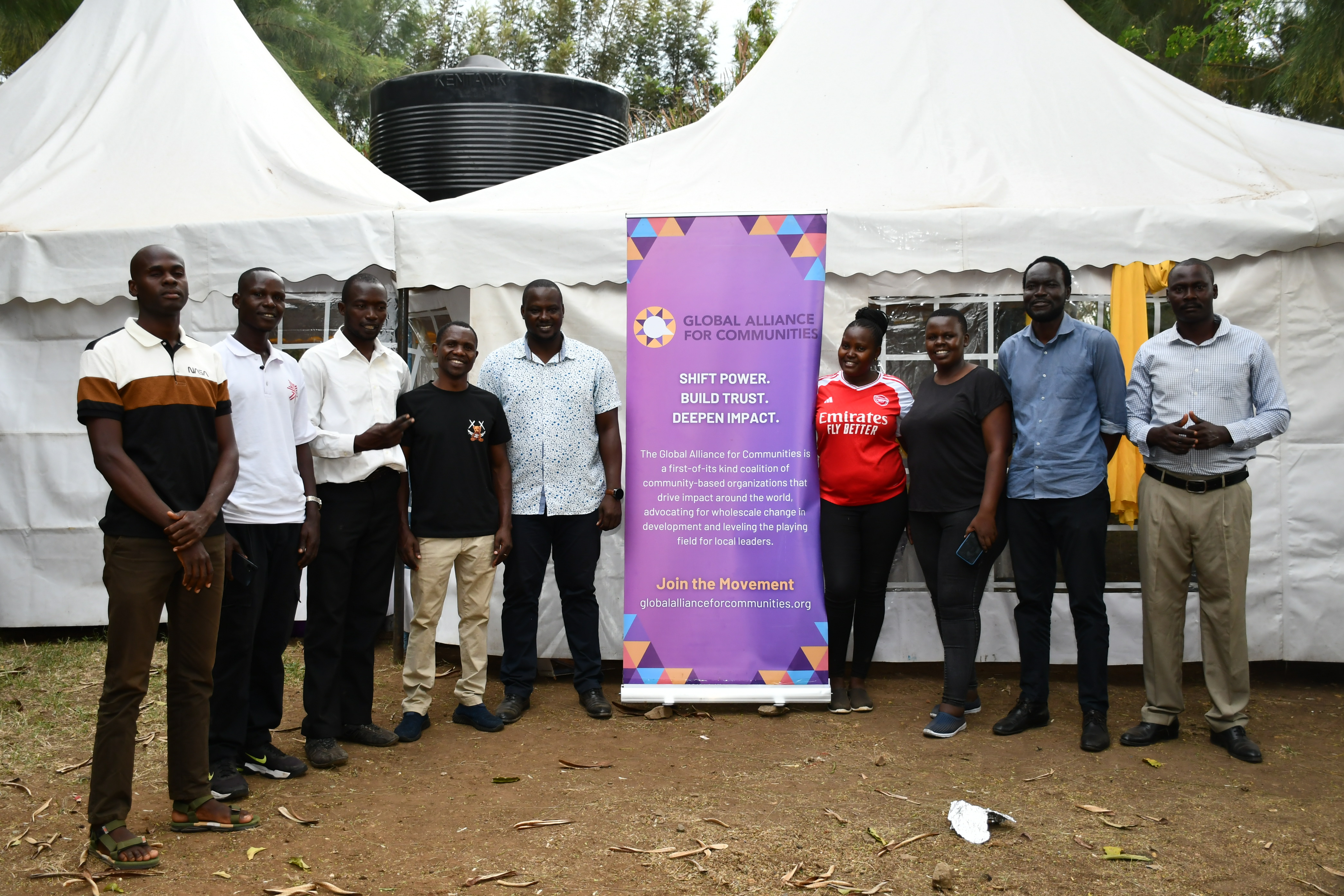
On 10 December 2025, members of the Global Alliance for Communities reconvened at the United Destiny Shapers CBO grounds in Nyalenda, Kisumu, for Part 2 of the Kisumu capacity building training. Sixty representatives from community-based organizations took part in a focused session on financial development, gender mainstreaming, and resource mobilization.
This second phase built directly on the earlier leadership and governance training, shifting attention from organizational foundations to the practical systems and strategies needed to sustain inclusive, well-resourced community work.

Key learnings
The session opened with a recap of the previous training, revisiting leadership styles, characteristics of effective leaders, governance principles, conflict resolution mechanisms, advocacy strategies, and practical tools such as constitutions, codes of conduct, and financial accountability templates. Participants reflected on clear progress in confidence across leadership, governance, advocacy, and fundraising, alongside strong calls for continued mentorship within their organizations.
The core of the day focused on strengthening financial and resource systems through a gender-responsive lens. Participants explored financial development topics including budgeting, accounting, auditing, and expense tracking, with emphasis on transparency as a foundation for donor trust.
Gender mainstreaming was addressed as a practical organizational responsibility, not an abstract concept. Sessions examined how gender equality can be integrated into organizational policies, programs, and budgets, with concrete examples of how gender disparities often appear in resource allocation and decision-making.
The resource mobilization component focused on identifying funding opportunities, engaging donors, writing grant proposals, and recognizing community assets as part of sustainable financing strategies. A key message throughout the day was that strong financial systems and inclusive practices reinforce an organization’s credibility and fundraising potential.

Learning through practice
The training used a participatory approach combining short presentations, group discussions, case studies, and practical exercises. Participants worked in groups to develop sample gender-responsive budgets, role-played donor negotiation scenarios, and analyzed case studies from community-based organizations that have successfully integrated gender considerations into their financial strategies.
These hands-on activities allowed participants to apply concepts directly to their own organizational contexts and challenges.
Outcomes and next steps
By the end of the training, participants had developed personalized action plans outlining how they would apply the learning within their organizations, including conducting gender audits, strengthening financial systems, and diversifying funding sources. Participants also committed to continued peer engagement through WhatsApp groups to support collaboration and shared learning.
Key recommendations emerging from the session included follow-up workshops to track implementation of action plans, access to online learning resources such as resource mobilization toolkits, and stronger partnerships with local government structures, including the Kisumu County Gender Sector Working Group, to support gender-responsive initiatives.

Voices from the training
Participants highlighted the practical value of the session:
“The training opened my eyes to how gender mainstreaming can transform our budgeting. We will allocate resources more equitably, and the resource mobilization tips helped us secure a new grant.”
Maureen Aluoch, Pamoja CBO
“I appreciated the focus on financial development tools. Integrating gender perspectives was new to me, but the exercises made it clear. The sessions were interactive and insightful.”
Philip Apunda, Programs Officer, Od Mikayi CBO
“Resource mobilisation was the highlight. Learning to diversify funding sources will sustain our projects, and the gender component ensured we consider all community members.”
Emelda Odep, Team Lead, Secret Chambers CBO
“This training bridged the gap between theory and practice. We have already started applying gender audits in our finances.”
Ezra Phelix Olulo, Determined Achievers Youth
By combining financial development, gender responsiveness, and resource mobilization, Part 2 of the Kisumu training strengthened the practical capacity of CBOs to sustain inclusive and accountable community work. Together with the earlier focus on leadership and governance, the Kisumu sessions laid a strong foundation for long-term organizational resilience.